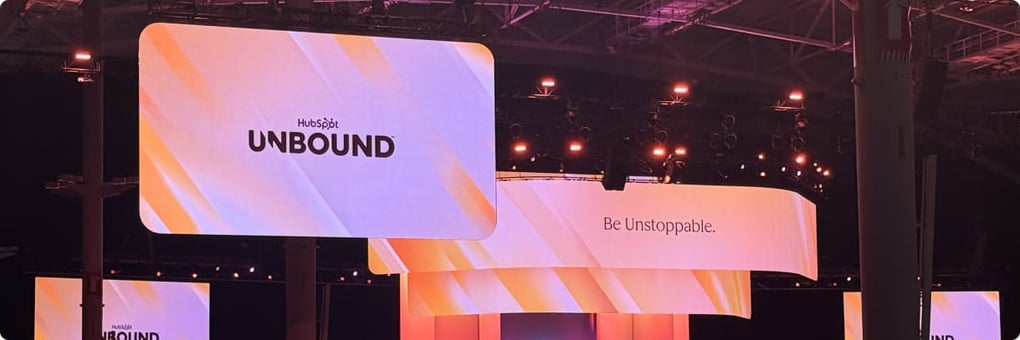
This year HubSpot's big September event had a new name. INBOUND became UNBOUND — because, in HubSpot's words, "a name rooted in one methodology from the internet era wasn't enough." We were in Boston from September 15 to 18 as a HubSpot partner, and most of our time went into meetings.
Here is what was announced, what it means if you build on HubSpot, and our take.
The event in brief
- When and where: September 16–18, 2026, at the Boston Convention and Exhibition Center, with Partner Day on September 15. (UNBOUND, HubSpot Developers)
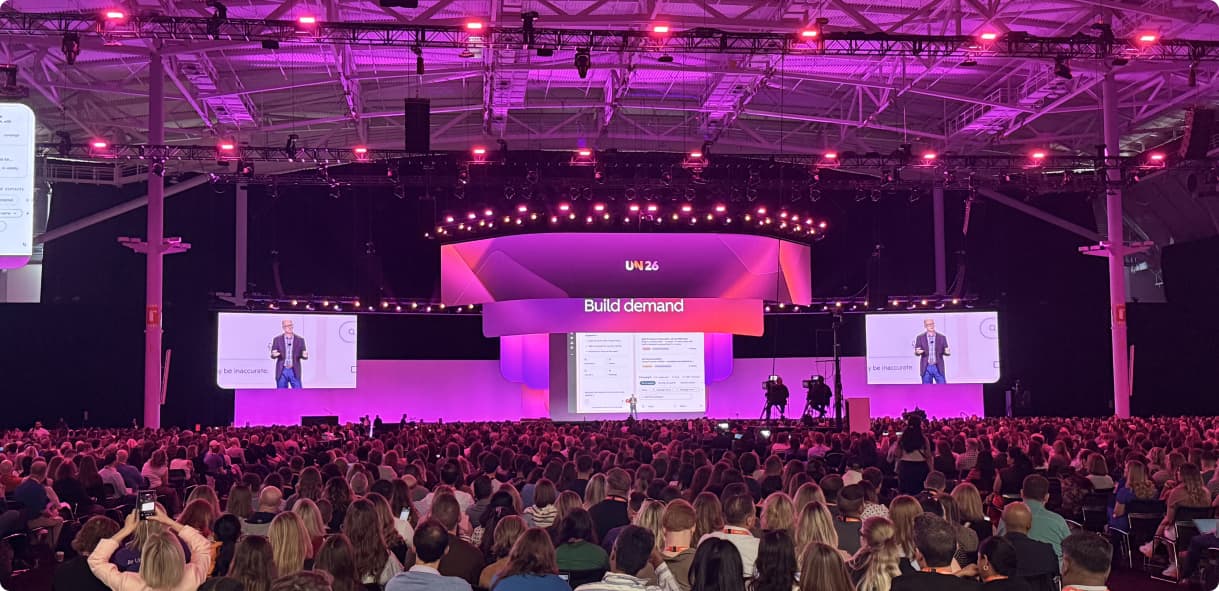
- Main stage: CEO Yamini Rangan opened with the product keynote; co-founder Dharmesh Shah's session was "You To The Power of AI." (Agenda)
- The theme in one line: AI only pays off when it knows your business. HubSpot calls that Growth Context.
The big announcements
HubSpot described its Fall 2026 Spotlight as its "most foundational product release." (HubSpot) The headline pieces:
- Smart CRM that keeps itself up to date from calls, emails and meetings.
- Breeze Assistant, rebuilt to hand work off to agents. Most other products drop the "Breeze" label — the assistant keeps it. (Red Pandas)
- Marketing Studio with dedicated agents for campaigns, content and nurturing. (HubSpot)
- Agent Hub and Agent Builder, plus HubSpot Work in beta. (Penguin Strategies)
- Ads in ChatGPT, with HubSpot claiming the first CRM integration, alongside Microsoft Advertising. (HubSpot)
HubSpot now positions itself as an "Agentic Customer Platform" with three layers: context, action and coordination. (Innovation Visual)
What's new for partners
For agencies, this was the most practical part of the week (HubSpot partner recap):
- Portability (beta): copy workflows, agents, forms, emails and objects between client portals. Build it once, reuse it everywhere.
- Co-delivery with a HubSpot architect on deals over $10,000.
- 40% commission on credit packs sold through December 31, 2026.
What's new for developers
The developer changelog is where the ecosystem really grew (HubSpot Developers):
- Developer Platform 2026.09 is generally available, with date-based API versioning.
- The MCP server now reaches custom objects, leads, landing pages, campaigns and marketing email — and apps can ship their own MCP server component. HubSpot counts more than 7,900 agents connected through MCP. (Partner recap)
- Service keys (beta) replace private apps as the credential for integrations.
- A new "Build with AI" docs section and an Agent CLI.
What wasn't on stage: the website
Here is the one thing we noticed by its absence. Across every recap we read, there was no major announcement for the CMS itself — nothing on themes, Content Hub templates, or turning a Figma design into a site. (Penguin, Hacking Demand, Elcap)
Agents can now create landing pages through MCP — but they fill templates that already exist. Someone still has to build the theme those agents publish into.
That is not a complaint. It is where builders fit in. The more work agents do inside HubSpot, the more the quality of the website underneath matters: its modules, its editable fields, how well it holds up when a marketer — or an agent — changes it. It is also exactly the layer transjt works on: turning a Figma design or AI-builder code into a native HubSpot theme.
Our take
We left Boston optimistic. The future is exciting, and the ecosystem is growing — in partner programs, in developer tooling, and in the number of people building on HubSpot in new ways.
What it means for HubSpot builders:
- Context is the product now. Clean CRM data is what makes every new agent useful. Agencies that fix data first will get more out of this release than those that switch on agents first.
- Build for reuse. Portability rewards agencies that package their work — the same logic that makes a good theme worth more than a one-off page.
- Get ready for agents as users. If agents are going to create and edit pages, your theme is their interface. Editable, well-structured modules stop being nice-to-have.
- Watch the developer platform. Versioned APIs, MCP and service keys are the foundation the next generation of HubSpot apps will be built on.